Multicellular Life: The Power of Cell SpecializationHey guys, ever wondered what makes
multicellular organisms
so incredibly diverse and complex? I mean, from a tiny ant to a massive blue whale, and even us humans, it all boils down to one super crucial concept:
cell specialization
. This isn’t just some fancy biology term; it’s the fundamental principle that allows these organisms to perform amazing feats that single-celled creatures can only dream of. Imagine if every single person in a huge company tried to do
every single job
– from accounting to marketing to cleaning! Total chaos, right? Well, that’s exactly what would happen in a multicellular organism if its cells weren’t specialized. Instead, what we see is an incredible division of labor, where each cell type has a unique role, structure, and function, all working together in perfect harmony. This
cellular specialization
is the secret sauce behind the evolution of complex life forms, allowing for greater efficiency, adaptability, and ultimately, survival. It means that while every cell in your body contains the exact same genetic blueprint, they’re not all doing the same thing. Some cells are busy transmitting electrical signals, others are contracting to move your body, while still others are fighting off invaders. This level of organization is mind-blowing when you think about it. It’s what transforms a simple cluster of cells into an intricate system capable of thought, movement, and reproduction. So, buckle up, because we’re about to dive deep into the fascinating world of
cell specialization
and discover just how vital it is for all the amazing life forms around us. We’ll explore what it truly means for each cell to have a dedicated job, the massive advantages this brings, and how these tiny powerhouses actually become so distinct. Get ready to have your mind blown by the intricate dance of life at its most fundamental level! This concept isn’t just for textbooks; it’s happening inside you right now, every second of every day, powering your existence and allowing for the incredible complexity that defines
multicellular organisms
. It’s truly a testament to the brilliance of biological evolution, enabling organisms to move beyond simple existence to thrive in incredibly diverse environments, building robust systems that can adapt and overcome countless challenges. The sheer
efficiency
gained through
specialization
means resources are utilized optimally, and tasks are performed with greater precision and speed than any generalist cell could ever hope to achieve. This ultimately leads to a higher chance of survival and reproduction for the entire organism, pushing the boundaries of what life can be. We’re talking about a cellular symphony where every instrument plays its part to create a magnificent, living masterpiece. It’s the reason why we can have brains that think, muscles that move, and hearts that beat, all thanks to the humble yet powerful process of
cell specialization
. Without this biological marvel, the complexity and beauty of the natural world as we know it simply wouldn’t exist. It’s the bedrock upon which all complex life is built, offering a clear advantage in the grand scheme of evolution, making organisms more resilient, more adaptable, and infinitely more fascinating. Every cell, no matter how small, contributes to the overall success and integrity of the organism, highlighting the crucial role of
cellular differentiation
in forging the diverse tapestry of life we observe today. It’s not just about one cell doing one thing; it’s about millions, billions, even trillions of cells, each highly
specialized
, collaborating seamlessly to maintain life’s intricate balance and functionality. This collaborative effort underlines the profound significance of
cell specialization
as a cornerstone of biological complexity and success.### Understanding Cell Specialization: What It Really MeansAlright, let’s get down to brass tacks: what exactly does
cell specialization
mean for each cell in a
multicellular organism
? In the simplest terms,
cell specialization
, often called
cellular differentiation
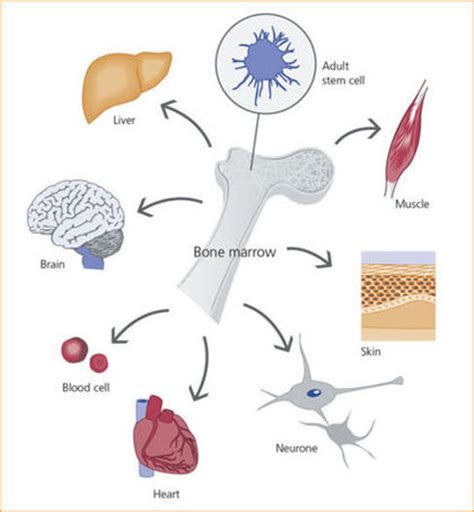
, is the process where a generic, unspecialized cell develops into a more distinct cell type. This distinct cell type then has a very specific
structure
and
function
tailored to a particular role within the organism. Think of it like this: when you start a new company, everyone might be a generalist at first, doing a little bit of everything. But as the company grows, people start taking on specific roles – one person becomes the marketing guru, another the finance whiz, and someone else the tech expert. Each person (or cell, in our analogy) becomes
highly specialized
in their field. Similarly, in your body, every single cell originates from a single fertilized egg, a zygote. This zygote is the ultimate generalist, a
totipotent stem cell
capable of becoming
any
cell type. But as it divides and develops, these identical initial cells start to receive signals – genetic, chemical, environmental – that tell them,
