Mastering Intentional Walks: Baseball’s Strategic Leaders\n\nHey there, baseball fanatics and casual observers alike! Ever found yourself watching a game, the tension palpable, a superstar batter at the plate, and then,
poof
– the pitcher just throws four wide ones, giving him a free pass to first base? That, my friends, is an
intentional walk
, and it’s one of the most intriguing, often frustrating, yet incredibly strategic moves in all of baseball. Today, we’re diving deep into the world of
intentional walks leaders
, exploring not just who got walked the most, but
why
these strategic decisions are made, how they’ve evolved over time, and what they tell us about the game’s greatest hitters. Get ready to understand the nuances of this tactical maneuver that defines so many clutch moments on the diamond. This isn’t just about statistics; it’s about the psychological warfare, the calculated risks, and the sheer respect (or fear) that certain players command. So, let’s unravel the mystery behind the free pass and honor the players who truly mastered the art of being
too good
to pitch to.\n\n## What Are Intentional Walks, Anyway?\n\nAlright, let’s kick things off by defining what an
intentional walk
really is, because understanding the basics is crucial for appreciating the entire strategic dance happening on the field. Simply put, an intentional walk, often abbreviated as IBB (Intentional Base on Balls), occurs when the defensive team, usually the pitcher under the manager’s direction, purposefully allows the batter to reach first base without having to throw a single hittable pitch. Traditionally, this involved the pitcher throwing four pitches far outside the strike zone, signifying that they have no intention of letting the batter swing. However, in 2017, Major League Baseball (MLB) introduced a rule change to speed up the game: managers can now simply signal to the umpire that they wish to issue an intentional walk, and the batter is immediately awarded first base. No pitches are even thrown anymore, which has certainly altered the visual drama, but the
strategic intent
remains exactly the same.\n\nThe primary
purpose of an intentional walk
is almost always to manipulate the base runners or to avoid letting a particularly dangerous hitter beat you in a crucial situation. Imagine this, guys: bottom of the ninth, tie game, runner on second, less than two outs, and the opponent’s absolute slugger, the guy who hits bombs every other at-bat, is stepping up to the plate. As a manager, you’re thinking, “There’s no way I’m letting
that
guy beat me with one swing.” So, you issue an intentional walk. Why? Because you might be setting up a force out at any base, or, more commonly, a
double play opportunity
with runners on first and second. Now, instead of facing the game’s best power hitter with just one potential out to worry about, you’re facing a presumably weaker hitter, and a ground ball could potentially end the inning or the game with two outs. It’s a classic
strategic move
designed to minimize risk against an elite talent, even if it means putting an extra runner on base.\n\nThis isn’t a decision made lightly; it’s a high-stakes
baseball strategy
that requires careful consideration of the game situation, the score, the inning, who’s on base, and most importantly, who’s coming up next in the batting order. Giving a free pass means you’re essentially conceding a base, hoping that the next batter is less of a threat or that the new base-running alignment favors your defense. It’s about creating a more favorable matchup for your pitcher, or at least one that presents a
lower probability
of giving up a game-deciding hit. Sometimes, it’s even a psychological tactic, a way to show undeniable respect for a hitter’s prowess, acknowledging that they are simply
too dangerous
to be challenged. Whether it’s to avoid a grand slam, set up a double play, or just sidestep a historically dominant batter, the intentional walk is a fascinating aspect of baseball that highlights the continuous chess match played between the dugouts and on the diamond. It’s a testament to a batter’s skill that an opposing team would rather put him on base for free than risk him doing damage with the bat. It’s a compliment, albeit a frustrating one for the hitter!\n\n## A Dive into Intentional Walk History\n\nStepping back in time, the history of the
intentional walk
in baseball is as rich and evolving as the game itself. For decades, it was a fundamental, albeit often debated, part of a manager’s tactical toolbox, a cornerstone of
baseball strategy
. While the concept of deliberately putting a batter on first base has likely existed since the early days of baseball, its formalization and widespread use became more pronounced as the game matured. Early managers, particularly those known for their cunning, would use the free pass to navigate tricky innings and avoid the league’s most feared sluggers. Think about the likes of John McGraw or Casey Stengel, strategists who lived and breathed every pitch; they understood that sometimes, the best pitch to throw a dangerous batter was none at all.\n\nThroughout various
baseball evolution
periods, the frequency and context of intentional walks have fluctuated. In the pre-analytics era, many decisions were based purely on gut feeling, experience, and direct observation of a player’s current hot streak or a pitcher’s fatigue. Managers would often err on the side of caution when facing legends like Babe Ruth, Ted Williams, or Barry Bonds. These were guys who could single-handedly change the outcome of a game with one swing, making the intentional walk a completely logical, if not always popular, choice. The strategy wasn’t just about setting up a double play; it was often a profound acknowledgment of a hitter’s sheer power and ability to hit a home run in any count, a move born out of respect and self-preservation.\n\nOne of the most significant changes in the history of intentional walks, as we briefly mentioned, occurred very recently in 2017. Before this, issuing an intentional walk required the pitcher to physically throw four pitches outside the strike zone. This often led to moments of unintentional drama: a wild pitch allowing a runner to advance, or even the rare, embarrassing occasion where a pitcher accidentally threw a strike, giving the batter a chance to swing! The rule change, which allows managers to simply signal to the umpire, was primarily implemented to improve the
pace of play
– a major initiative for MLB to make games shorter and more engaging for modern audiences. This
rule innovation
instantly removed about 30 seconds from each intentional walk, which, over the course of a long season, added up. While it streamlined the process, it also took away a small, unique element of human error and the visual spectacle of the four-pitch dance.\n\nThe
impact of analytics
has also played a massive role in the recent decline of intentional walks. Modern baseball, heavily influenced by sabermetrics, emphasizes efficiency and maximizing run-scoring opportunities while minimizing giving up free bases. Data-driven decision-making often shows that putting an extra runner on base, even to face a supposedly weaker hitter, increases the overall probability of giving up a run. The trade-offs are now more meticulously calculated, with teams often preferring to challenge a hitter, even a good one, rather than gifting a free base. This shift reflects a broader change in
strategic decision-making
across the league, moving away from purely anecdotal evidence to rigorously analyzed probabilities. So, while once a common managerial tactic, the intentional walk has become a less frequent, more acutely calculated move in the modern game, shaping its
evolution
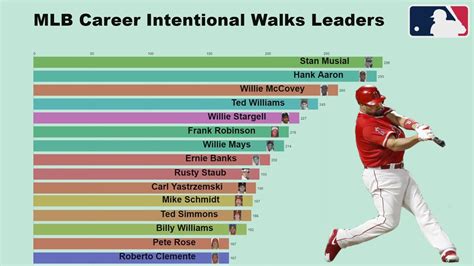
in fascinating ways.\n\n## Who Are the Intentional Walk Leaders?\n\nAlright, guys, this is where we get to the really juicy stuff – identifying the
intentional walk leaders
in baseball history. When a player gets intentionally walked, it’s not just a statistic; it’s a ringing endorsement of their prowess, a testament to the fact that they are simply too dangerous to be challenged. These are the
baseball legends
who struck fear into opposing pitchers and managers, the players whose bats were so potent that giving them a free pass seemed like the
lesser of two evils
. We’re talking about the ultimate
offensive threats
, the guys whose presence at the plate often meant the difference between a win and a loss, compelling the other team to simply wave them to first base. It’s a fascinating look into who the game’s most respected (and feared) hitters truly were and are.\n\n### All-Time Intentional Walk Kings\n\nWhen you look at the all-time list, one name stands head and shoulders above the rest, a figure synonymous with both power and controversy:
Barry Bonds
. With an astonishing 688 career intentional walks, Bonds isn’t just a leader; he’s in a league of his own, holding a record that likely will never be broken. To put that into perspective, the player in second place, Albert Pujols, has 316. That’s more than double! Bonds’s peak years with the San Francisco Giants were legendary, particularly in the early 2000s, where he was intentionally walked an incredible 120 times in 2004 alone, another single-season record. Why so many? His plate discipline was unparalleled, his home run power historic, and his ability to crush a ball out of any ballpark made challenging him an almost suicidal act for opposing pitchers. Teams would rather load the bases than risk him hitting a grand slam. It was a strategic acknowledgment of his near-mythical status as a hitter during that era. Other notable players on the all-time list include Albert Pujols, who, throughout his illustrious career, consistently posed a threat that demanded respect, and Ken Griffey Jr., whose graceful yet powerful swing made him a frequent target for a free pass. These players represent the pinnacle of offensive production, their names etched in history not just for their hits and homers, but for the sheer terror they inspired in the hearts of opposing managers.\n\n### Single-Season Intentional Walk Records\n\nWhile Barry Bonds owns the career record, his 2004 season is also the gold standard for single-season intentional walks. That year, he logged
120 intentional walks
, which is a staggering number. It speaks volumes about how dominant he was and how little faith opposing teams had in their pitchers to get him out. Imagine being so good that you’re intentionally walked more times in a single season than some players are walked
at all
in their entire careers! Another name that frequently appears in single-season top lists is
Willie McCovey
, particularly his 45 intentional walks in 1969. McCovey, a powerful first baseman for the Giants, was another player who could change a game with one swing, making him a prime candidate for a strategic free pass. These records highlight specific seasons where certain hitters were simply on another level, leaving managers with no choice but to wave the white flag and put them on base. These moments are iconic, showcasing the strategic desperation and respect afforded to extraordinary talent, often in the midst of a heated pennant race or crucial playoff push.\n\n### Modern-Day Intentional Walk Mavericks\n\nIn the modern era, with the aforementioned 2017 rule change and the increasing influence of analytics, intentional walks have become far less common. However, even today, there are still players who command enough respect to warrant the free pass. Guys like Mike Trout, Shohei Ohtani, and Aaron Judge, who are perennial MVP candidates and possess game-changing power, still find themselves being intentionally walked, though not with the same frequency as the legends of yesteryear.
Mike Trout
, for example, is consistently one of the most dangerous hitters in baseball, capable of hitting for average, power, and getting on base. When runners are on, and a big hit could swing the game, managers still sometimes opt to put Trout on first to get to a less threatening batter. Similarly,
Shohei Ohtani’s
unique dual-threat ability means he’s not just a power hitter but also a strategic nightmare, making him a prime candidate for a free pass when he’s batting. These players represent the contemporary
strategic targets
, the individuals who, even in an era of fewer intentional walks, still stand out as being
