Magnitude 6.1 Earthquake: What Its Strength MeansHave you ever wondered,
“how strong is a 6.1 magnitude earthquake?”
It’s a really common question, and one that deserves a clear answer. When we hear numbers like 6.1 on the seismic scale, it’s easy for our minds to conjure up images of utter devastation, but what does that number truly signify in terms of real-world impact? Well, guys, a
magnitude 6.1 earthquake
isn’t just a number; it represents a significant release of energy that can have profound effects on communities, infrastructure, and the very ground beneath our feet. Understanding this specific magnitude helps us grasp the potential for damage, the necessity of preparedness, and the incredible forces at play within our planet. It’s crucial to remember that while a 6.1 magnitude earthquake is considered a strong event, its ultimate impact can vary wildly depending on a myriad of factors, making each seismic event a unique story. We’re talking about everything from the geology of the area to the depth of the quake and, critically, how well the local buildings are constructed. This isn’t just academic; it’s about real safety and understanding risks. So, let’s dive deep into what a
magnitude 6.1 earthquake
truly means for those living through it and what we can do to stay safe.### Decoding the Richter Scale: What “Magnitude 6.1” Truly ImpliesWhen we talk about a
magnitude 6.1 earthquake
, we’re primarily referring to its size as measured on a seismic scale, typically the Moment Magnitude Scale (Mw), which has largely replaced the older Richter scale for larger quakes, although the public often still refers to it as “Richter.” Both scales aim to quantify the
energy released
at the earthquake’s source. What’s absolutely vital to understand about these scales, guys, is that they are
logarithmic
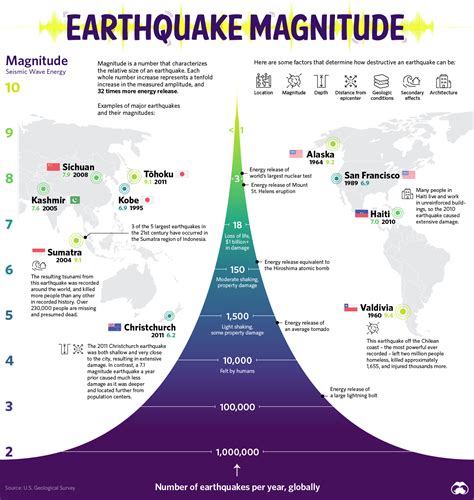
. This isn’t just some fancy scientific term; it means that each whole number increase on the scale represents a ten-fold increase in the amplitude of seismic waves, and, even more dramatically, about a 32-fold increase in the energy released. So, a
magnitude 6.1 earthquake
isn’t just slightly stronger than a 5.1; it’s
significantly
more powerful. Imagine the difference in energy between a 5.1 and a 6.1 – that’s roughly 32 times more energy unleashed! This kind of power can cause substantial damage, especially in populated areas. For context, earthquakes below magnitude 2.0 are usually imperceptible to humans, while those between 2.0 and 3.9 are often felt but rarely cause damage. Once we hit the 4.0-4.9 range, people will definitely feel the shaking, and minor damage might occur. A 5.0-5.9 magnitude earthquake is considered moderate; it can cause considerable damage to poorly constructed buildings and minor damage to well-built structures. So, when we get to a
6.1 magnitude earthquake
, we’re squarely in the territory of a
strong
earthquake. This magnitude is capable of causing
severe damage
in populated areas, particularly to buildings that aren’t earthquake-resistant. The shaking can be intense, causing objects to fall, furniture to move, and even leading to widespread structural damage. It’s not just a subtle rumble; it’s a profound, sometimes terrifying, ground motion. The duration of the shaking also plays a critical role here; while smaller quakes might last only seconds, a 6.1 magnitude event could shake for a sustained period, increasing the likelihood of damage and the sense of fear. It’s this combination of raw energy release and duration that makes a 6.1 magnitude earthquake a serious concern. It’s imperative that people living in seismically active regions understand these distinctions and respect the power that a 6.1 magnitude event carries.### The Ground Beneath Your Feet: Expected Impacts of a Magnitude 6.1Now that we’ve decoded the numbers, let’s get real about what a
magnitude 6.1 earthquake
actually
feels
like and the kind of chaos it can unleash. This isn’t just about abstract seismic data; it’s about the very tangible shaking, the potential for destruction, and the human toll. A 6.1 magnitude earthquake is a force to be reckoned with, capable of turning everyday life upside down in an instant. The shaking can be intense enough to make standing difficult, to send objects flying off shelves, and to cause significant alarm and panic. It’s a moment when the ground, which usually feels so solid and dependable, suddenly becomes a terrifyingly unstable surface. The immediate aftermath can be disorienting, with dust filling the air, alarms blaring, and the sounds of collapsing structures or falling debris. Understanding these impacts is crucial for effective preparedness and response.#### Shaking and Structural DamageWhen a
magnitude 6.1 earthquake
strikes, the primary immediate effect is intense ground shaking. This isn’t just a gentle wobble; it can be a violent, sustained motion that feels like the earth is rolling or even slamming sideways. The
intensity
of the shaking (what people actually feel and the damage observed) can vary greatly even for the same magnitude, depending on factors like the depth of the quake, the distance from the epicenter, and the local geology. In areas directly above the epicenter, or those with soft, unconsolidated soils, the shaking from a 6.1 magnitude event can be amplified, leading to more severe damage. For structures, this kind of shaking is a true test of their resilience. Well-engineered, modern buildings designed to withstand seismic activity might sway and sustain only minor, non-structural damage like cracked plaster or broken windows. However,
older buildings, unreinforced masonry structures, or those built without strict seismic codes
can suffer severe damage, including partial or complete collapse. Walls can crack extensively, foundations can shift, and roofs can cave in. Imagine historic brick buildings or homes with weak connections between walls and roofs – these are particularly vulnerable. The force exerted on a building during a 6.1 magnitude earthquake can be enormous, stressing materials beyond their limits.Beyond direct structural collapse, a
magnitude 6.1 earthquake
can trigger secondary hazards that are just as, if not more, destructive.
Landslides
are a significant concern, especially in mountainous or hilly regions with unstable slopes, potentially burying roads, homes, and even entire communities. Think about areas prone to heavy rainfall – the saturated ground becomes even more susceptible to massive earth movements.
Liquefaction
is another terrifying phenomenon where saturated, loose sandy soils temporarily lose their strength and behave like a liquid during strong shaking. This can cause buildings to sink, tilt, or even topple over as their foundations lose support. Imagine the ground turning into quicksand; that’s what liquefaction can do. Underground utilities, like water and gas lines, are also highly vulnerable to rupture, leading to potential fires and widespread service disruptions. Roads and bridges can crack, buckle, or collapse, isolating communities and hindering emergency response efforts. It’s a cascade of potential failures, making the aftermath of a 6.1 magnitude earthquake incredibly complex and challenging to manage. The sheer energy of a 6.1 magnitude event is enough to significantly alter landscapes and infrastructure, necessitating robust engineering and meticulous planning in earthquake-prone zones.#### Human Impact and Public Safety ConcernsThe human impact of a
magnitude 6.1 earthquake
goes far beyond just structural damage; it profoundly affects people’s lives, health, and sense of security. The immediate aftermath can be incredibly chaotic, with a high potential for injuries and, tragically, fatalities. The number of casualties is highly dependent on a number of variables, including the time of day the earthquake strikes (are people awake and able to react, or are they asleep?), the population density of the affected area, and, perhaps most critically, the quality of building construction. In densely populated urban areas with many vulnerable structures, a 6.1 magnitude earthquake can lead to hundreds, if not thousands, of injuries, ranging from minor cuts and bruises caused by falling objects to severe trauma from collapsing debris. Imagine the scene: people trapped under rubble, needing immediate rescue, and hospitals overwhelmed with incoming patients. It’s a scenario that emergency services rigorously train for. Beyond physical injuries, the
psychological impact
of a 6.1 magnitude earthquake is immense. Survivors often experience severe distress, anxiety, and even post-traumatic stress disorder (PTSD) due to the terrifying experience and the loss of homes, loved ones, or their sense of safety. The feeling of the earth shaking violently can be deeply unsettling, leaving a lasting impression. Public safety concerns escalate dramatically. Infrastructure disruption is a major headache: electricity outages can plunge entire regions into darkness, hindering rescue efforts and impacting communications. Water supply lines can rupture, leading to shortages and potential contamination, posing significant public health risks. Gas lines can break, sparking fires that, coupled with damaged roads, become incredibly difficult to contain. Transportation networks, including roads, bridges, and railways, can be severely compromised, making it challenging for emergency responders to reach affected areas and for residents to evacuate or access essential services. Think about ambulances trying to navigate cracked highways or rescue teams struggling to reach isolated communities. Communication systems can also fail, making it difficult for people to contact loved ones or report emergencies. This level of disruption from a
magnitude 6.1 earthquake
highlights the critical importance of strong disaster preparedness plans, not just at a governmental level but also within communities and individual households. It’s about ensuring we’re ready to respond when such a powerful natural event occurs, minimizing loss of life and suffering.### Beyond the Number: Factors Amplifying or Mitigating a 6.1 Earthquake’s ForceWhile the 6.1 magnitude gives us a base understanding of the earthquake’s inherent power, it’s just one piece of the puzzle, guys. The
actual experience
and the extent of damage from a
magnitude 6.1 earthquake
are heavily influenced by a cocktail of other critical factors. Think of it like this: a punch of the same strength can feel very different depending on where it lands, who’s receiving it, and what they’re wearing. Similarly, a 6.1 magnitude earthquake’s effects are shaped by geology, depth, proximity, and even human preparedness. It’s not just about the raw power released, but how that power is transmitted through the ground and how structures respond to it. This nuanced understanding is what allows scientists and engineers to better predict and mitigate risks, and for us, as individuals, to take appropriate precautions. Without considering these variables, we’re only seeing half the picture of what a 6.1 magnitude event truly entails.#### Depth and Proximity to Population CentersThe depth at which a
magnitude 6.1 earthquake
originates is a massive factor in how much shaking and damage it causes on the surface. Imagine dropping a stone into a pond: the closer you are to where it lands, the bigger the splash. It’s similar with earthquakes. A
shallow earthquake
(say, less than 70 km deep) means the seismic energy doesn’t have as far to travel before it hits the surface. This results in more intense, often more destructive, shaking. A
6.1 magnitude earthquake
that occurs very close to the surface, say just 10-20 km deep, can feel incredibly violent and cause widespread damage. The energy waves are concentrated and hit with more force. Conversely, a deeper earthquake, even of the same 6.1 magnitude, would have its energy dispersed over a larger area as it travels upwards, often leading to less intense shaking at the surface. While still felt, the impact on buildings and infrastructure would likely be less severe. So, a deep 6.1 magnitude earthquake might be felt over a larger geographical area but with less localized damage, whereas a shallow one might be felt over a smaller area but cause concentrated,
devastating
damage near the epicenter.The
proximity to population centers
is another critical variable. It might sound obvious, but a
magnitude 6.1 earthquake
hitting a remote, uninhabited area will, naturally, cause no human casualties or property damage. However, the exact same 6.1 magnitude earthquake striking directly under a densely populated city is a completely different story. The closer the epicenter is to urban areas, the greater the potential for a catastrophic impact. This isn’t just about the number of people; it’s also about the concentration of infrastructure – homes, offices, hospitals, schools, power grids, and transportation networks. If a 6.1 magnitude event occurs directly beneath a major city, the sheer volume of buildings and the number of people exposed to severe shaking increase the risk of widespread destruction, injuries, and fatalities exponentially. Furthermore, the ability of emergency services to respond effectively is directly related to the distance they need to travel and the state of the access routes. An earthquake near a city means a higher demand on emergency services, potentially leading to slower response times and greater suffering. This combination of shallow depth and close proximity to people truly amplifies the destructive potential of any
magnitude 6.1 earthquake
, making it a scenario that requires diligent planning and resilient urban development.#### Geological Conditions and Building ResilienceThe
geological conditions
of an area play a massive, often underestimated, role in how a
magnitude 6.1 earthquake
manifests itself on the surface. Imagine standing on solid bedrock versus standing on soft, loose sediment like clay or sand. When an earthquake strikes, seismic waves travel differently through these materials. Bedrock tends to transmit seismic waves more efficiently, leading to sharper, higher-frequency shaking, but often with less amplification. However, soft, unconsolidated soils can significantly
amplify
seismic waves, making the ground shaking much more intense and prolonged. This phenomenon is known as site amplification, and it can turn a moderately damaging earthquake into a highly destructive one. Areas built on reclaimed land, old riverbeds, or filled-in marshlands are particularly susceptible to this amplification effect, as well as to liquefaction, which we discussed earlier. The underlying geology dictates how much the ground literally shakes and shifts, directly impacting structures built upon it. Think about the difference between a solid foundation and one built on what essentially acts like jelly during a quake.Furthermore, the specific location relative to
fault lines
and overall
tectonic plate activity
is crucial. A
magnitude 6.1 earthquake
is typically caused by the sudden release of stress along a fault line, where two blocks of the earth’s crust slide past each other. The type of fault (strike-slip, normal, or reverse) and its orientation can influence the pattern of shaking. Living near an active fault means you’re in a high-risk zone, as even moderate quakes can be locally very damaging. The broader context of tectonic plate boundaries – where these massive plates collide, pull apart, or slide past each other – defines the general seismicity of a region. Countries located on major plate boundaries, like Japan or Chile, experience frequent and often powerful earthquakes, including many of 6.1 magnitude or higher. This consistent seismic activity informs their building codes and urban planning.This brings us to
building resilience
. This is, perhaps, one of the most significant mitigating factors against the destructive power of a
magnitude 6.1 earthquake
. Even in the face of intense ground shaking, well-engineered structures designed and built according to strict seismic codes can withstand significant forces. These buildings incorporate features like reinforced concrete, flexible steel frames, base isolators that separate the building from the ground, and shear walls that resist lateral forces. Think of them as being designed to flex and move with the earth, rather than rigidly resisting it and breaking. In contrast, older buildings, those made of unreinforced masonry, or structures built with inadequate or no seismic considerations, are highly vulnerable. They lack the necessary strength and flexibility to cope with the stresses of a 6.1 magnitude event, often leading to partial or complete collapse. The tragic difference in outcomes between a community with modern, earthquake-resistant infrastructure and one with older, vulnerable buildings, even when hit by the
exact same 6.1 magnitude earthquake
, can be stark – the difference between minor damage and widespread devastation. This highlights the critical importance of investing in resilient infrastructure and enforcing stringent building codes in earthquake-prone regions.### Preparing for the Unpredictable: What You Can DoAlright, guys, understanding the potential impact of a
magnitude 6.1 earthquake
isn’t meant to scare us, but to empower us with knowledge. Since we can’t stop these natural events from happening, the best thing we can do is prepare. Being ready drastically increases our chances of staying safe, minimizing injuries, and recovering more quickly. It’s not about being paranoid; it’s about being proactive and responsible for ourselves, our families, and our communities. Think of it as a life insurance policy, but for immediate survival and resilience. Every minute spent on preparedness can make a world of difference when a 6.1 magnitude event, or any significant earthquake, strikes. It’s a collective effort, requiring individual actions that contribute to a stronger, more resilient community as a whole. This isn’t just a “maybe someday” scenario for those in seismically active regions; it’s a “be ready always” reality. So, let’s look at some concrete steps we can all take to ensure we’re as prepared as possible.First and foremost, let’s talk about the
“Drop, Cover, Hold On”
drill. This is a fundamental, life-saving action to take the moment you feel the ground shaking from a
magnitude 6.1 earthquake
. “Drop” to the ground immediately before the quake knocks you down. “Cover” your head and neck with your arms, and if possible, crawl under a sturdy desk or table. “Hold On” to your shelter until the shaking stops. If you’re not near sturdy furniture, drop to the ground next to an interior wall and protect your head and neck. Do
not
run outside during the shaking, as falling debris from buildings is a major hazard. This simple action, practiced regularly, can significantly reduce your risk of injury. Teach everyone in your household, including kids, this essential drill. We often drill for fire, but earthquake drills are equally, if not more, crucial in high-risk areas. Beyond immediate actions, having a
well-stocked emergency kit
is non-negotiable. This isn’t just for a
6.1 magnitude earthquake
, but any disaster. Your kit should include at least three days’ worth of water (one gallon per person per day) and non-perishable food. Think about things like a battery-powered or hand-crank radio, extra batteries, a flashlight, a first-aid kit, a whistle (to signal for help), dust masks (for filtering contaminated air), moist towelettes, garbage bags and plastic ties (for personal sanitation), a wrench or pliers (to turn off utilities), a manual can opener, local maps, and copies of important documents. Don’t forget prescription medications, infant formula, pet food, and any other special needs. Keep this kit in an easily accessible place, like a closet near an exit, and make sure everyone in the family knows where it is. Having a
family emergency plan
is also vital. Sit down with your household and discuss what you would do during and after a
magnitude 6.1 earthquake
. Identify safe places in each room (under sturdy furniture). Determine an out-of-area contact person everyone can call or text if local lines are down (texting often works when calls don’t). Establish a meeting point outside your home in case of evacuation and a secondary meeting point outside your neighborhood if you can’t get home. Practice turning off your main water and gas valves if you know how to do so safely (and only if you smell gas or suspect a leak). Securing heavy furniture, appliances, and water heaters to wall studs can prevent them from toppling over during a
6.1 magnitude earthquake
, reducing injury risk and property damage. Tall bookshelves, refrigerators, and water heaters are prime candidates for tipping, so anchor them properly. Finally, participate in your community’s preparedness efforts. Know your neighbors, identify vulnerable individuals who might need extra help, and be aware of your local emergency plans and resources. Being prepared for a
magnitude 6.1 earthquake
is an ongoing process, not a one-time event. Regularly check your emergency kit, update your family plan, and practice your drills. This comprehensive approach is our best defense against the unpredictable power of Mother Nature.## ConclusionSo, guys, what have we learned about the formidable
magnitude 6.1 earthquake
? It’s much more than just a number on a scale. We’ve seen that a 6.1 magnitude event represents a
significant
release of seismic energy, about 32 times more powerful than a 5.1 magnitude quake. This makes it a strong earthquake, capable of causing
severe damage
in populated areas, especially to structures not built to modern seismic standards. The intensity of shaking and the extent of destruction aren’t solely determined by the magnitude itself, but are heavily influenced by critical factors like the quake’s depth, its proximity to urban centers, the local geological conditions (like soft soils that amplify shaking), and, perhaps most importantly, the
resilience of local building codes and infrastructure
.A shallow 6.1 magnitude earthquake under a city built on unstable ground with older structures can be catastrophic, leading to widespread structural failure, landslides, liquefaction, and significant human casualties. Conversely, a deeper 6.1 magnitude quake in a less populated area with modern, earthquake-resistant buildings might cause less severe damage, though it would still be widely felt and cause considerable alarm. The human impact extends beyond physical injuries, encompassing severe psychological distress and widespread disruption to essential services like power, water, and transportation. Ultimately, understanding the true
strength of a magnitude 6.1 earthquake
underscores the vital importance of preparedness. By taking proactive steps like practicing “Drop, Cover, Hold On,” assembling comprehensive emergency kits, developing family emergency plans, and securing heavy furniture, we can significantly mitigate risks and enhance our ability to survive and recover. Earthquakes are an unpredictable force of nature, but our response and readiness don’t have to be. Let’s stay informed, stay prepared, and work together to build more resilient communities in the face of these powerful events. Knowing what a
magnitude 6.1 earthquake
entails is the first step towards ensuring our safety and well-being. It’s about respecting nature’s power and empowering ourselves through knowledge and action.“`
