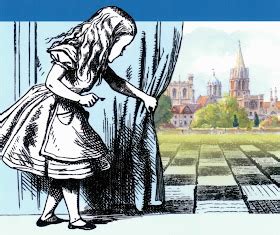
Lewis Carroll: Unveiling the Wonderland Creator Lewis Carroll, a name synonymous with whimsy, imagination, and a touch of delightful madness, isn’t just an author; he’s a cultural phenomenon. When we talk about
Lewis Carroll
, we’re diving headfirst into the mind behind
Alice’s Adventures in Wonderland
and
Through the Looking-Glass
, tales that have captivated generations and shaped the very landscape of children’s literature and fantasy. But here’s a little secret, guys: the man we know as Lewis Carroll was actually named
Charles Lutwidge Dodgson
, a brilliant mathematician, logician, and Anglican deacon. Pretty cool, right? He was a fascinating individual whose dual life, one as a rigorous academic and the other as a whimsical storyteller, makes his legacy even more intriguing. His works, filled with bizarre characters, illogical situations, and profound underlying philosophical questions, continue to challenge and enchant readers of all ages, proving that true genius often thrives in the most unexpected combinations of logic and fantasy. We’re talking about a guy whose stories are so ingrained in our culture that phrases like “down the rabbit hole” and “mad as a hatter” are now everyday expressions, a testament to the enduring power and pervasive influence of his creative genius. So, buckle up, because we’re about to explore the incredible world of Lewis Carroll and discover why his tales remain as relevant and beloved today as they were over a century ago. It’s a journey into the heart of imagination, where the rules are bent, logic is optional, and wonder is around every corner. ### Who Was Lewis Carroll? A Glimpse into the Life of Charles Lutwidge Dodgson Diving into the life of
Lewis Carroll
means getting acquainted with
Charles Lutwidge Dodgson
, the incredibly intelligent, yet often shy and reserved, man behind the pen name. Born in Daresbury, Cheshire, England, on January 27, 1832, Charles was the eldest son and third of eleven children in a deeply religious and intellectually stimulating family. His father, a conservative Anglican clergyman, was himself a scholar, and the family environment fostered a love for learning, logic, and storytelling. Young Charles exhibited an early aptitude for mathematics and logic, alongside a natural talent for inventing games, performing magic tricks, and creating puppet shows to entertain his siblings. Imagine growing up in a household where creativity was encouraged and intellectual curiosity was paramount; it’s easy to see how this upbringing laid the foundation for the imaginative worlds he would later conjure. Despite a stammer that plagued him throughout his life and made him self-conscious in social situations, Dodgson excelled academically. He attended Rugby School and later Christ Church, Oxford, where his mathematical prowess truly shone. His academic achievements were remarkable, leading him to a distinguished career at Christ Church as a lecturer in mathematics, a position he held for twenty-six years. This might seem like a stark contrast to the whimsical writer we know, but it’s crucial to understand that his logical mind was a cornerstone of his creative genius. The intricate puzzles, paradoxes, and wordplay found in his
Alice
books are often rooted in his deep understanding of logic and mathematics, twisted just enough to create the delightful nonsense we adore. He wasn’t just a professor who lectured; he was a serious scholar who contributed to his field, publishing several mathematical treatises under his real name. Guys, this duality is one of the most fascinating aspects of his persona. On one hand, you have the precise, methodical academic, meticulously dissecting numbers and theories. On the other, you have the whimsical storyteller, conjuring talking animals and illogical landscapes. It’s this blend of rigorous intellect and boundless imagination that makes
Lewis Carroll’s
work so unique and enduring. His life at Oxford, while dedicated to academia, also provided him with the inspiration and connections that would ultimately lead to his literary fame, especially through his friendships with various families and their children, most notably the Liddell family. This seemingly ordinary life in the hallowed halls of Oxford was, in fact, the fertile ground where extraordinary stories would soon bloom, forever changing the world of literature. ### Alice’s Adventures in Wonderland: The Birth of a Literary Phenomenon Now, let’s talk about the big one:
Alice’s Adventures in Wonderland
. This isn’t just a book; it’s a cultural landmark, a portal to a world that defies logic and celebrates the boundless imagination of childhood. The story of its creation is almost as enchanting as the tale itself, firmly cementing
Lewis Carroll’s
place in literary history. The genesis of
Alice
famously occurred on a lazy summer afternoon, July 4, 1862, during a rowing trip down the River Thames.
Charles Dodgson
was in a boat with his good friend Reverend Robinson Duckworth and three young daughters of Henry Liddell, the Dean of Christ Church: Lorina (aged 13), Alice (aged 10), and Edith (aged 8). To entertain the girls, particularly
Alice Liddell
, Dodgson began spinning an impromptu tale about a bored little girl named Alice who falls down a rabbit hole into a fantastical world. The girls were utterly captivated, especially Alice, who begged Dodgson to write down the story. What started as an oral narrative, improvised on a whim, slowly transformed into a handwritten manuscript titled
Alice’s Adventures Under Ground
. Dodgson, being the meticulous person he was, not only wrote out the story but also illustrated it with thirty-seven of his own drawings, presenting it to Alice Liddell as a Christmas gift in 1864. Talk about a thoughtful present, right? Luckily for all of us, his friends recognized the brilliance of the story and encouraged him to publish it. It was then that Dodgson decided to adopt the pen name
Lewis Carroll
(a playful anglicization of his Latinized name,
Carolus Ludovicus
, which itself was derived from Charles Lutwidge) and revised and expanded the manuscript. In 1865,
Alice’s Adventures in Wonderland
was published, complete with the iconic and now inseparable illustrations by Sir John Tenniel. The collaboration between Carroll’s imaginative narrative and Tenniel’s unforgettable visuals created a masterpiece that immediately resonated with readers. The book became an instant classic, lauded for its unique blend of humor, wordplay, and fantastical elements. It broke away from the didactic moralizing common in Victorian children’s literature, offering instead pure escapism and a celebration of nonsense. The themes woven throughout
Alice
are remarkably rich and continue to be analyzed by scholars and fans alike. We’re talking about explorations of identity, the challenges of growing up, the absurdity of authority, and the very nature of logic and language. From the Mad Hatter’s tea party to the Queen of Hearts’ volatile pronouncements, Carroll created characters and scenarios that are not only entertaining but also subtly (or not so subtly) critique the conventions of Victorian society. The book’s lasting appeal, guys, lies in its ability to transport us to a world where anything is possible, reminding us that sometimes, the most profound truths are found in the most nonsensical places. It’s a testament to
Lewis Carroll’s
genius that a story born from a summer boat trip could evolve into such a foundational work of literature, continuing to inspire countless adaptations and discussions over a century and a half later. ### Through the Looking-Glass and What Alice Found There: Carroll’s Brilliant Sequel Just six years after the monumental success of
Alice’s Adventures in Wonderland
,
Lewis Carroll
once again invited us into Alice’s fantastical world with
Through the Looking-Glass, and What Alice Found There
, published in 1871. This sequel proved that his imaginative well was far from dry, offering a new dimension to Alice’s adventures, this time inspired by the world of chess. If you loved the first book, you’re in for another treat with this one, as Carroll ramps up the cleverness and linguistic play even further. In this story, Alice steps through a mirror into a world where everything is reversed, much like a reflection. Here, the entire landscape is laid out like a giant chessboard, and Alice herself becomes a pawn, determined to become a queen. This brilliant structural device allows Carroll to introduce a whole new cast of unforgettable characters, each more peculiar than the last. We meet Tweedledum and Tweedledee, whose quarrels are as cyclical as their nursery rhyme origins; Humpty Dumpty, the arrogant egg-man who believes words mean whatever he wants them to mean, sparking fascinating discussions on semantics; and the fierce Jabberwocky, a creature so iconic that its nonsensical poem, included in the book, has become a linguistic marvel in its own right. The
Jabberwocky
poem is a perfect example of
Lewis Carroll’s
mastery of portmanteau words and evocative language, creating a vivid image of a monstrous beast using words that are largely invented but somehow perfectly convey its fearsome nature. “
'Twas brillig, and the slithy toves did gyre and gimble in the wabe; All mimsy were the borogoves, and the mome raths outgrabe.
” Who else could create such compelling imagery from pure invention? This sequel deepens the themes of identity and language introduced in
Wonderland
, exploring them through the lens of reversal and reflection. Alice’s journey across the chessboard is a metaphor for navigating life’s challenges, with each square presenting a new riddle or encounter. The book is replete with dazzling wordplay, logical paradoxes, and philosophical musings disguised as lighthearted conversations. Carroll, the mathematician and logician, shines brightly here, using the structured chaos of a chess game to explore the limits and absurdities of logic. The Red Queen’s famous line, “
It takes all the running you can do, to keep in the same place. If you want to get somewhere else, you must run at least twice as fast as that!
” is a profound statement on progress and effort, surprisingly relevant even today. Just like its predecessor,
Through the Looking-Glass
was beautifully illustrated by Sir John Tenniel, whose drawings are as integral to this book’s charm as they were to
Wonderland
. The visual depictions of the Red Queen, the White Knight, and the Jabberwocky have become ingrained in our collective consciousness, shaping how we imagine these literary figures. This book not only solidified
Lewis Carroll’s
reputation as a master of children’s literature but also demonstrated his extraordinary ability to continually innovate within his unique brand of intellectual whimsy. It’s a sequel that doesn’t just rest on the laurels of the original but expands and enriches the Carrollian universe in truly spectacular ways, proving that sometimes, the second act can be just as, if not more, brilliant than the first. ### Beyond Wonderland: Carroll’s Diverse Literary Legacy While
Alice’s Adventures in Wonderland
and
Through the Looking-Glass
are undoubtedly the crown jewels in
Lewis Carroll’s
literary output, it would be a disservice to the man to think his creative genius stopped there.
Charles Lutwidge Dodgson
was a prolific writer and thinker, with a diverse body of work that extended far beyond the fantastical journeys of Alice. His other contributions, though perhaps less universally known, offer fascinating insights into his complex mind and showcase his remarkable versatility. One of his most significant non-Alice works is
The Hunting of the Snark
, a lengthy nonsense poem published in 1876. This epic, described by Carroll himself as an “agony in eight fits,” follows a motley crew of adventurers—including a Bellman, a Butcher, a Beaver, and a Baker—on their perilous quest to hunt a mysterious creature called the Snark. The poem is a masterpiece of absurdism and wordplay, filled with memorable lines and an underlying current of existential dread, despite its comical surface. It’s a brilliant example of how
Lewis Carroll
could weave profound ideas into seemingly nonsensical narratives, challenging readers to find meaning (or revel in the lack thereof) in his intricate verse. Fans of the
Alice
books will appreciate its similar blend of wit, imagination, and a subtle critique of human endeavors. Beyond poetry, Carroll also ventured into longer narrative fiction with
Sylvie and Bruno
(1889) and its sequel,
Sylvie and Bruno Concluded
(1893). These novels are quite different from the
Alice
books, blending a Victorian-era frame story with a fantastical fairy-land narrative. While they haven’t achieved the same iconic status as Alice, they are rich with Carroll’s characteristic wordplay, philosophical musings, and a deeper exploration of moral and social themes. They show a more overtly didactic side of Carroll, albeit still cloaked in whimsy and invention. For those interested in the full scope of
Lewis Carroll’s
intellect, his mathematical and logical works are essential. Under his real name,
Charles Lutwidge Dodgson
, he published numerous academic texts, including
An Elementary Treatise on Determinants
and
Euclid and his Modern Rivals
. These works reveal the rigorous analytical mind that underpinned his imaginative writings. He was deeply interested in symbolic logic, and his book
Symbolic Logic, Part I
(1896) made significant contributions to the field, presenting complex ideas in an accessible and often playful manner. He even devised logic puzzles and games, like the word ladder (which he called “Doublets”), showcasing his enduring fascination with language, structure, and problem-solving. And let’s not forget his significant contributions to the emerging art of photography. Dodgson was an avid and talented photographer, particularly known for his portraits of children and prominent figures of his era. His photographs offer a unique visual record of Victorian society and provide another lens through which to understand his artistic sensibilities and his fascination with childhood. Guys, understanding the breadth of
Lewis Carroll’s
work—from his intricate nonsense poems and philosophical novels to his serious mathematical treatises and groundbreaking photography—gives us a much richer picture of the man. He wasn’t just a children’s author; he was a multifaceted genius who left an indelible mark across multiple fields, constantly pushing the boundaries of imagination and intellect. ### The Enduring Charm and Impact of Lewis Carroll The enduring charm and profound impact of
Lewis Carroll’s
work are undeniable, cementing his status as one of literature’s most influential and beloved figures. More than a century after their initial publication, his
Alice
books, along with his other writings, continue to resonate deeply across generations, influencing countless artists, writers, thinkers, and pop culture creators. It’s truly amazing how a story born from an impromptu river trip can have such a ripple effect throughout time, don’t you think? His influence on literature is colossal. Before
Alice’s Adventures in Wonderland
, children’s books often served primarily as moral instruction tools, filled with cautionary tales and overt lessons. Carroll shattered that mold, championing pure escapism and the sheer joy of imagination. He liberated children’s literature, paving the way for the development of fantasy as a legitimate and respected genre. Authors like J.R.R. Tolkien, C.S. Lewis, and Neil Gaiman have all acknowledged his foundational role in shaping the fantastical landscapes they later created. The very concept of
nonsense literature
was elevated by Carroll, demonstrating that stories don’t always need a straightforward moral or logical progression to be profound or entertaining. Beyond literature,
Lewis Carroll’s
impact extends into virtually every corner of popular culture. His characters—Alice, the Mad Hatter, the Cheshire Cat, the Queen of Hearts, the White Rabbit—are instantly recognizable icons, transcending the pages of his books to become global symbols of whimsy and wonder. They’ve been reinterpreted in countless films, from Disney’s animated classic to Tim Burton’s visually distinct adaptations, as well as in television shows, stage plays, ballets, video games, and even theme park attractions. Artists have found endless inspiration in his surreal imagery, while musicians have penned songs directly referencing his stories or adopting his unique brand of absurdity. Psychologists and philosophers, too, have found fertile ground in
Lewis Carroll’s
tales. The exploration of identity, dreams, the subversion of language, and the nature of reality within
Alice
have led to extensive academic analysis. Concepts like “going down the rabbit hole” have entered our everyday lexicon to describe an intricate or bewildering journey of discovery, often into complex subjects. His work is frequently cited in discussions about logic, semiotics, psychoanalysis, and existentialism, showcasing the profound depth lurking beneath the whimsical surface. The philosophical dilemmas presented through playful dialogue, such as Humpty Dumpty’s assertion that words mean exactly what he chooses them to mean, continue to spark debates about language, power, and interpretation. Guys, the sheer breadth of
Lewis Carroll’s
enduring appeal is truly remarkable. His ability to create a world that is both utterly fantastical and surprisingly reflective of our own absurdities ensures that his stories remain fresh and relevant. They encourage us to embrace the illogical, question authority, and, most importantly, never lose our sense of wonder. His legacy is a vibrant tapestry woven from imagination, intellect, and timeless storytelling, continuing to enchant and inspire new generations to dive headfirst into the extraordinary world he so brilliantly created. ### Decoding Carroll: Themes, Symbolism, and the Power of Nonsense When we talk about
Lewis Carroll
, we’re not just talking about delightful stories; we’re diving into a treasure trove of themes, symbolism, and a revolutionary embrace of nonsense that continues to fascinate scholars and readers alike.
Alice’s Adventures in Wonderland
and
Through the Looking-Glass
are far more than simple children’s tales; they are sophisticated literary works brimming with layers of meaning, challenging us to look beyond the surface and question the very fabric of reality and logic. One of the most prominent themes running through Carroll’s work is the
exploration of identity
. Poor Alice is constantly asked “Who are you?” or finds herself changing size, leading to existential confusion. She struggles to define herself in a world that consistently redefines her, mirroring the tumultuous journey of childhood into adolescence. This theme resonates with anyone who has ever felt out of place or questioned their own sense of self. The fluidity of identity in Wonderland is both playful and profoundly unsettling, reminding us that who we are can sometimes feel as ephemeral as a dream. Another crucial aspect is
language and communication
. As a logician, Carroll was deeply interested in how language works—and how it can break down. His books are a masterclass in wordplay, puns, riddles, and linguistic absurdities. The Mad Hatter’s riddles that have no answers, Humpty Dumpty’s declaration that words mean whatever
he
chooses them to mean, and the very concept of
Jabberwocky
demonstrate Carroll’s fascination with the arbitrary nature of language and the power (or powerlessness) of communication. These linguistic games aren’t just for fun; they make us consider how meaning is constructed and how easily it can be deconstructed, offering a subtle critique of how we use and misuse words in our own “sensible” world.
Logic versus Nonsense
is perhaps the central philosophical battle in Carroll’s universe. Wonderland operates on its own peculiar brand of logic, one that often seems illogical to Alice but makes perfect sense within its own warped framework. This subversion of conventional logic is a brilliant way for Carroll to critique the rigid rules and societal conventions of Victorian England. By creating a world where the absurd is normal and the normal is absurd, he invites readers to question their preconceived notions of reality, order, and authority. The nonsense isn’t just random; it’s a carefully constructed form of literary art that uses illogical situations to highlight the arbitrariness of our own logical systems. Think about it, guys, a tea party that never ends because time is stuck, or a court of law where the verdict comes before the evidence – these are not just silly ideas, but profound commentaries on the human condition and the systems we build. Symbolism also abounds. The rabbit hole itself is a potent symbol for entering the subconscious, a plunge into the unknown. The various animals and characters often represent aspects of human behavior, societal roles, or even philosophical concepts. The Queen of Hearts, with her arbitrary cruelty, can be seen as a symbol of tyrannical authority, while the Cheshire Cat’s disappearing act and enigmatic grins speak to the elusive nature of truth and identity.
Lewis Carroll’s
genius lies in his ability to package these complex themes and philosophical inquiries within an entertaining narrative. He used nonsense as a powerful tool to engage critical thinking, challenge assumptions, and foster creativity. He didn’t just tell stories; he created worlds that encourage us to decode, interpret, and ultimately, find our own meaning in the delightful chaos. It’s this brilliant interplay of whimsy and profound thought that ensures
Lewis Carroll’s
work continues to captivate and challenge us, proving that the greatest lessons can often be found in the most unexpected and nonsensical places. ### Why Lewis Carroll Still Matters Today In a world that often feels increasingly complex, digital, and, let’s be honest, sometimes a little too serious,
Lewis Carroll’s
timeless stories about Alice’s adventures continue to offer a profound and much-needed antidote. The question isn’t just
why
his work has endured, but
why Lewis Carroll still matters today
, and the answers are as multifaceted as the characters he created. His narratives provide far more than mere entertainment; they offer valuable lessons, sparks of inspiration, and a crucial reminder of the power of imagination in our lives. First off, Carroll’s work remains a powerful
celebration of imagination and creativity
. In an age dominated by screens and pre-packaged experiences,
Alice’s Adventures in Wonderland
urges us to embrace the fantastical, to question the mundane, and to find wonder in the absurd. It encourages children and adults alike to think outside the box, to challenge conventions, and to see the world through a lens of boundless possibility. This emphasis on creative thought is not just fun; it’s a vital skill in a rapidly evolving world that demands innovative solutions and fresh perspectives. His stories are a constant source of inspiration for countless artists, writers, filmmakers, and musicians, proving that the well of his imagination is truly inexhaustible. Secondly,
Lewis Carroll’s
books are incredibly effective at fostering
critical thinking and questioning authority
. Alice, though a child, constantly tries to make sense of the nonsensical rules and arbitrary decisions of the Wonderland inhabitants. She challenges the Queen of Hearts’ commands, questions the logic of the Mad Hatter, and attempts to impose reason on chaos. This spirit of inquiry is more relevant than ever. In an era of abundant information (and misinformation), the ability to critically evaluate situations, to not accept things at face value, and to ask “Why?” or “What if?” is paramount. Carroll subtly teaches us that it’s okay, and even necessary, to challenge the status quo and to think independently, rather than blindly following absurd rules. Furthermore, Carroll’s masterful use of
language and logic
continues to be incredibly significant. As a mathematician and logician, he wove intricate linguistic puzzles, paradoxes, and wordplay into his narratives. These aren’t just clever tricks; they highlight the nuances, ambiguities, and sometimes the limitations of language itself. In an age of instant communication and shorthand, engaging with Carroll’s detailed and deliberate language can sharpen our understanding of semantics, rhetoric, and the precision of expression. His work makes us appreciate the beauty and complexity of words, encouraging a deeper engagement with communication. The theme of
identity and self-discovery
is another enduring reason why Carroll matters. Alice’s fluctuating size and her constant struggle to remember who she is resonate deeply with the challenges of navigating a complex world and finding one’s place within it. These narratives offer comfort and insight to anyone grappling with personal growth, change, and the ever-evolving question of “Who am I?” The timelessness of these universal human experiences ensures that Alice’s journey of self-discovery remains profoundly relatable. Lastly,
Lewis Carroll’s
works provide invaluable
escapism and comfort
. Life can be stressful, and sometimes, all we need is a trip down the rabbit hole to temporarily forget our worries and immerse ourselves in a world where logic takes a holiday. His stories offer a delightful refuge, reminding us of the simple joy of storytelling and the enduring power of a good yarn. Guys, from sparking imagination and encouraging critical thought to deepening our appreciation for language and providing a much-needed escape,
Lewis Carroll’s
legacy is as vibrant and vital today as it ever was. His contributions are not just dusty old classics but living, breathing works that continue to inspire, challenge, and delight, proving that true genius never truly goes out of style. So, go on, pick up one of his books again – you might just find a new piece of wonder waiting for you.
